Ophélie - Portraits

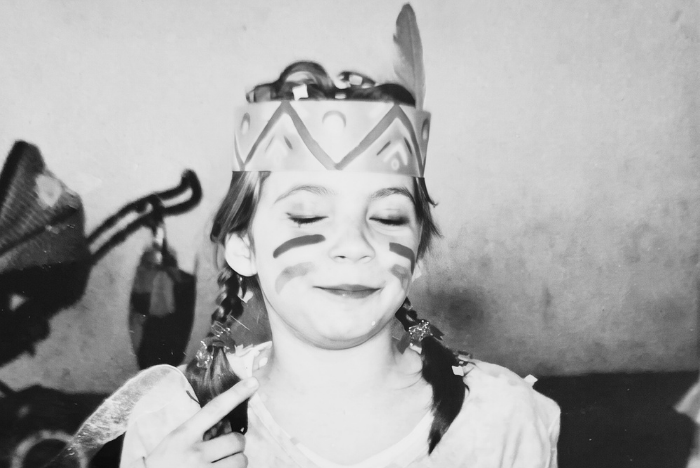

Between creative briefs and a box of markers shared with her children, Ophélie keeps a sharp eye on everything around her. As Art Director and Motion Designer at L’Imagerie Films, she creates tailor-made visual worlds and brings them to life on screen, while staying deeply attached to traditional drawing and authentic imagery.
1. Do you remember your first experience with drawing or visual art that made you want to turn it into a career?
When I was little, I spent a few years living with my grandparents. My grandmother was a seamstress for major fashion houses, making wedding dresses from her home. By the time I was six or seven, I already wanted to be a fashion designer. I practically lived in her workshop, made a huge mess and drew all the dresses I wanted her to make! She displayed my drawings all over the walls.
Meanwhile, my grandfather had me copy animals from old encyclopedias. That's when I realized drawing was really my thing. I was the only one in the family who drew, but once they saw how much I loved it, they encouraged me enormously.
2. You attend life drawing workshops outside work, while your job at the agency involves very digital motion design. How do you connect these two worlds?
I've always had this instinct to observe people and sketch what I see. When I lived in Paris, I used to spend my metro journeys discreetly drawing other passengers.
That's what I love about life drawing: capturing a posture or an attitude in just two minutes, without aiming for perfect realism.
In fact, during my very first preparatory art class, our teacher made us draw with our left hand to help us loosen up and break that perfectionist habit.
When working on projects at the agency, I still often need a piece of paper to sketch out framing and composition ideas before opening After Effects. For a long time, Benjamin and I drew our storyboards by hand. It was a great bridge between comics and observational sketching.
Today, time constraints and AI have taken over some of those steps. And while that makes sense given the agency's pace, continuing to draw traditionally in evening workshops remains my essential creative escape, with no briefs or algorithms involved.
3. At L’Imagerie, you wear two hats: Art Direction and Motion Design. How would you describe your role when a new project lands on your desk?
My role changes completely depending on the project.
When we start from a blank page for a pitch, I'm purely focused on art direction. Maël sets the overall direction, and I develop the visual universe.
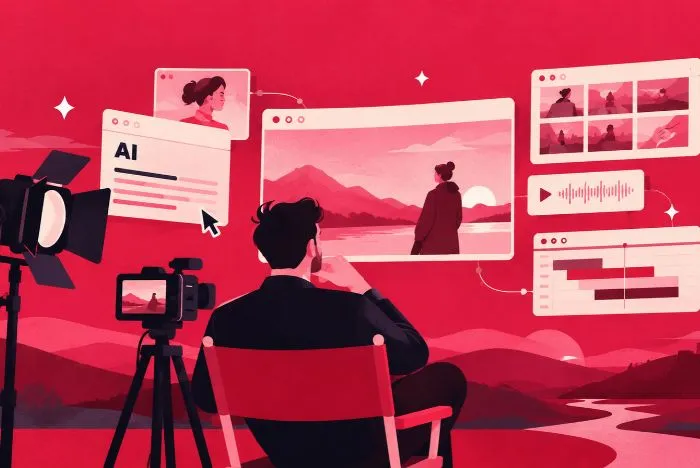
To communicate an idea, I put together what I call a "big salad" of references: moodboards, textures and framing intentions, now complemented by AI to quickly prototype visual concepts.
Then, on the motion design side, I work in two different ways.
Sometimes it's a fully animated project, where we create and animate every visual element from scratch. Other times, it's a live-action film, and I step in towards the end of the process to add the graphic elements: titles, visual identities, retouching and invisible visual effects.
These days, you need to be versatile: having an overall creative vision while mastering the tools needed to bring it to life.
4. As an Art Director, where do you find inspiration, and how do you overcome creative blocks?
I rely on my visual memory and reference libraries that I've been building for over ten years on Vimeo, Behance and Instagram.
When a new project comes in, I follow one reference to another until I find the image that captures my idea: a certain movement in one film, a color palette in another…
It's not about copying, but about collecting fragments and combining them to create something new.
And when I get stuck, AI can also help explore different directions and get the creative process moving again.
5. What's the most satisfying part of a motion design project, and conversely, what can drive you crazy?
My biggest satisfaction: getting approval on the first try. When the final result feels so fluid and natural that the client thinks it must have been effortless, that's when you know you got the creative direction right from the start.
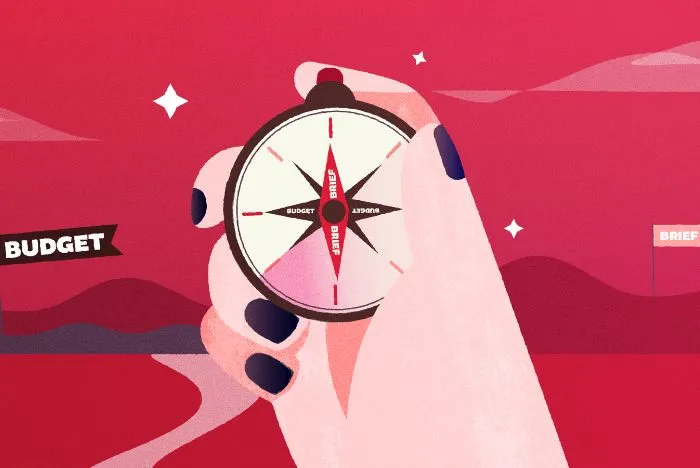
My worst nightmare: a client changing the brief halfway through a project when the animation is almost finished.
Or the classic technical surprise: finding out at delivery that the film needs to be adapted into fifteen different languages, after spending two days animating every single piece of typography by hand!
Those are the kinds of surprises that teach you to lock down the brief right from the beginning.
6. Between busy days at the agency and everyday family life, how do you recharge your batteries?
Honestly, that moment rarely comes before 10 p.m., once the kids are asleep. That's when I can finally sit down and paint a little. I've recently started watercolor painting again.
Since becoming a mother, I've learned to manage my time differently. You appreciate those little stolen moments of peace a thousand times more, just as you appreciate spending time together as a family.
Having children gives you a completely new perspective on everything around you.
7. With two children aged 3 and 5, what does the drawing corner look like at home? Have you tried explaining your job to them?
At their age, they know I work, but my job is still a pretty abstract concept to them. On the other hand, they've definitely figured out where I keep my art supplies!
When we draw together, I become their personal drawing robot. They ask me for a thousand things at once, I sketch the outlines, and they color all over them.
Our nicest little ritual is their school journal. Every month, they tell me what they've been up to, and I turn their stories into illustrations on the blank pages… before they come along and scribble all over them again. Yes, again!
It's a lovely, quiet moment we share together.
8. To wrap up this portrait, what can we wish you for the future?
Honestly, to keep improving!
Drawing is the common thread connecting my work, my personal interests and my children.
In motion design, things evolve incredibly fast. When I returned from maternity leave (six months for my first child and nine for my second), I felt like I'd missed years of developments.
The great thing about working at L’Imagerie is that, with Tristan, Benjamin and Nico, we're constantly experimenting and sharing what we discover with each other.
So, to keep learning, keep drawing… and hopefully find a little time to rest along the way!
Related Articles
Explore More

L'IMAGERIE
FILMS

