AI & Storytelling: Imagining Tomorrow, Producing It Today

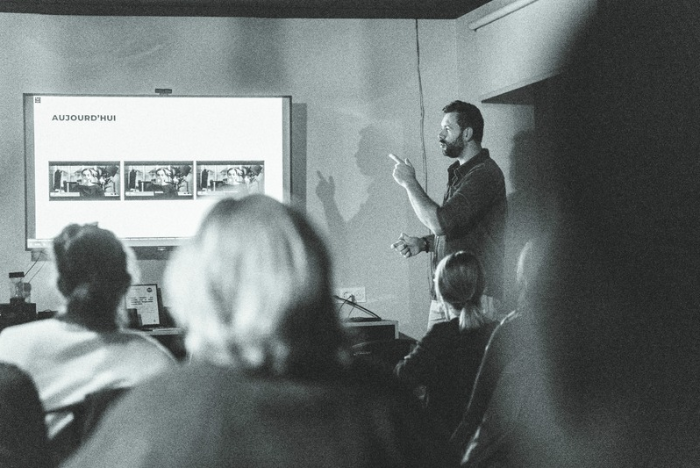
On November 5, we joined a conference hosted by Gardeners agency in Annecy, dedicated to artificial intelligence and storytelling.
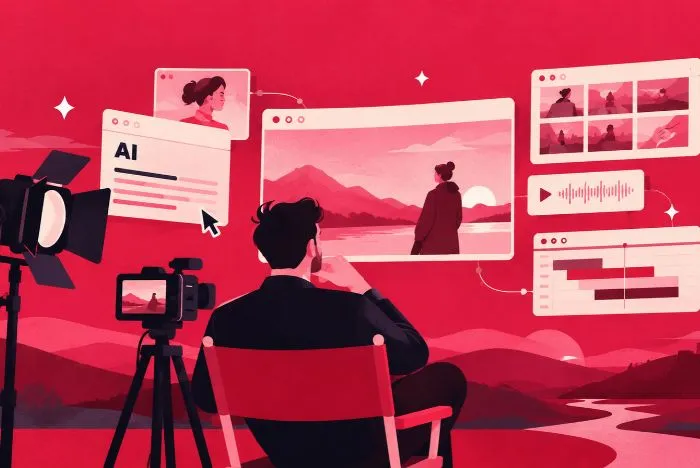
Two complementary perspectives were explored: how AI can help brands imagine their future, and how generative AI is transforming the way we produce films.
An opportunity to look beyond technology and focus on what really matters: creating stories that are meaningful, relevant and worth remembering.
Imagining the future of brand storytelling
Gardeners opened the conference with an exploration of strategic foresight and future-oriented storytelling.
What if brands stopped communicating exclusively about what they do today and started exploring what their industry, their business or society might look like in 10 or 15 years?
Through collaborative workshops, research and scenario-building, Gardeners helps brands explore possible futures and develop narratives that encourage conversation.
AI can support this process by analysing information, identifying weak signals and highlighting emerging trends. Not to predict the future, but to stimulate ideas and challenge assumptions.
In a world saturated with content, this raises an interesting question: should brands keep producing more, or focus on creating stories that last longer?
AI can do anything. Well, almost.
At L'Imagerie Films, we approached the subject from a different angle: what happens when these stories move from concept to production?
We opened our presentation with a warning: "This conference is already outdated."
AI tools and production methods are evolving almost every week. Visual effects, retouching, voiceovers, motion design and fully generated sequences are opening up impressive creative possibilities.
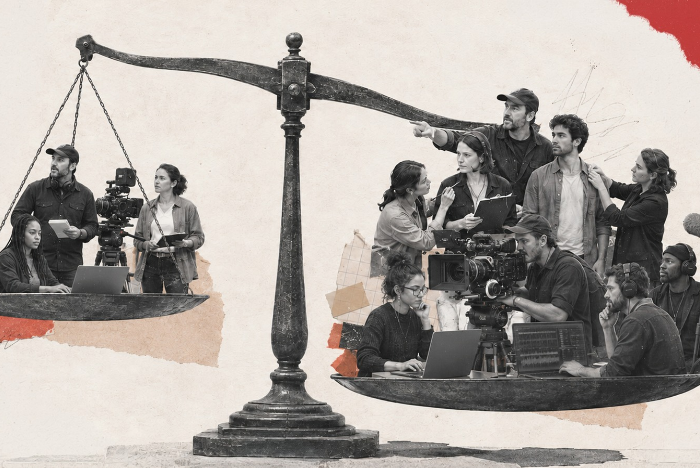
But generative AI comes with a paradox: it makes incredibly complex things surprisingly simple, while making seemingly simple things incredibly complicated.
Generating an elaborate environment can take minutes. Maintaining the same character across multiple shots, controlling a precise camera movement or achieving convincing performances can require hours of experimentation.
Behind AI, there's still a lot of human work
To illustrate these challenges, we shared a behind-the-scenes look at a recent film production using generative AI.
Six minutes of film. 1,200 generated images. A team of six people. Nearly 30 person-days of work.
Scriptwriting, casting, environment design, animatics, image generation, editing and post-production: the process involved many of the same stages as traditional filmmaking.
One particularly interesting step was filming a live-action animatic with our own team. This helped us establish framing, camera positions and performances before generating the final sequences.
In other words, we used traditional filmmaking techniques to guide a completely new production technology.
And getting a usable shot rarely happened on the first attempt. Even after pre-production, obtaining a final shot required around ten generations on average.
Our biggest takeaway? The more decisions you anticipate and validate before generating, the more control you retain over production.
AI doesn't eliminate production work
One of the biggest misconceptions about generative AI is that producing images with it is necessarily quick, easy and inexpensive.
AI can make certain complex sequences more accessible, reduce some production constraints and open up creative possibilities that would previously have required much larger budgets.
But the work doesn't disappear. Creative direction, preparation, iteration, editing, sound design and finishing remain essential.
And with tools evolving so quickly, keeping up requires constant research and experimentation.
AI doesn't remove the need for expertise. It changes where that expertise is needed.
A new tool for storytelling
Will AI replace traditional filmmaking? We don't think so.
Documentaries, testimonials, real people and authentic experiences will always have a place in audiovisual production. Sometimes, the value of an image lies precisely in the fact that it is real.
Generative AI offers another approach, with different possibilities and constraints.
The question shouldn't be "How can we make this film with AI?" but rather "Is AI the right tool to tell this story?"
At L'Imagerie, we see it as another tool in our creative arsenal, alongside live-action filmmaking, animation and other production techniques.
Better stories, new possibilities
Both presentations ultimately shared a common idea.
Gardeners explored how AI can help brands imagine the future and develop narratives that go beyond conventional communication.
At L'Imagerie, we showed how generative AI can bring new kinds of stories to the screen, provided it is guided by creative decisions and human expertise.
The opportunity isn't simply to produce faster or produce more. It's to create stories that matter and remain relevant beyond the moment they're published.
And if there's one thing to remember from our presentation, it's this:
Just because something is generated by AI doesn't mean it didn't take work.
Thanks to the Gardeners team for the invitation and to everyone who joined us for the conversations!
Related Articles
Explore More


L'IMAGERIE
FILMS

