
Where Does the Budget of an Advertising Film Go ?

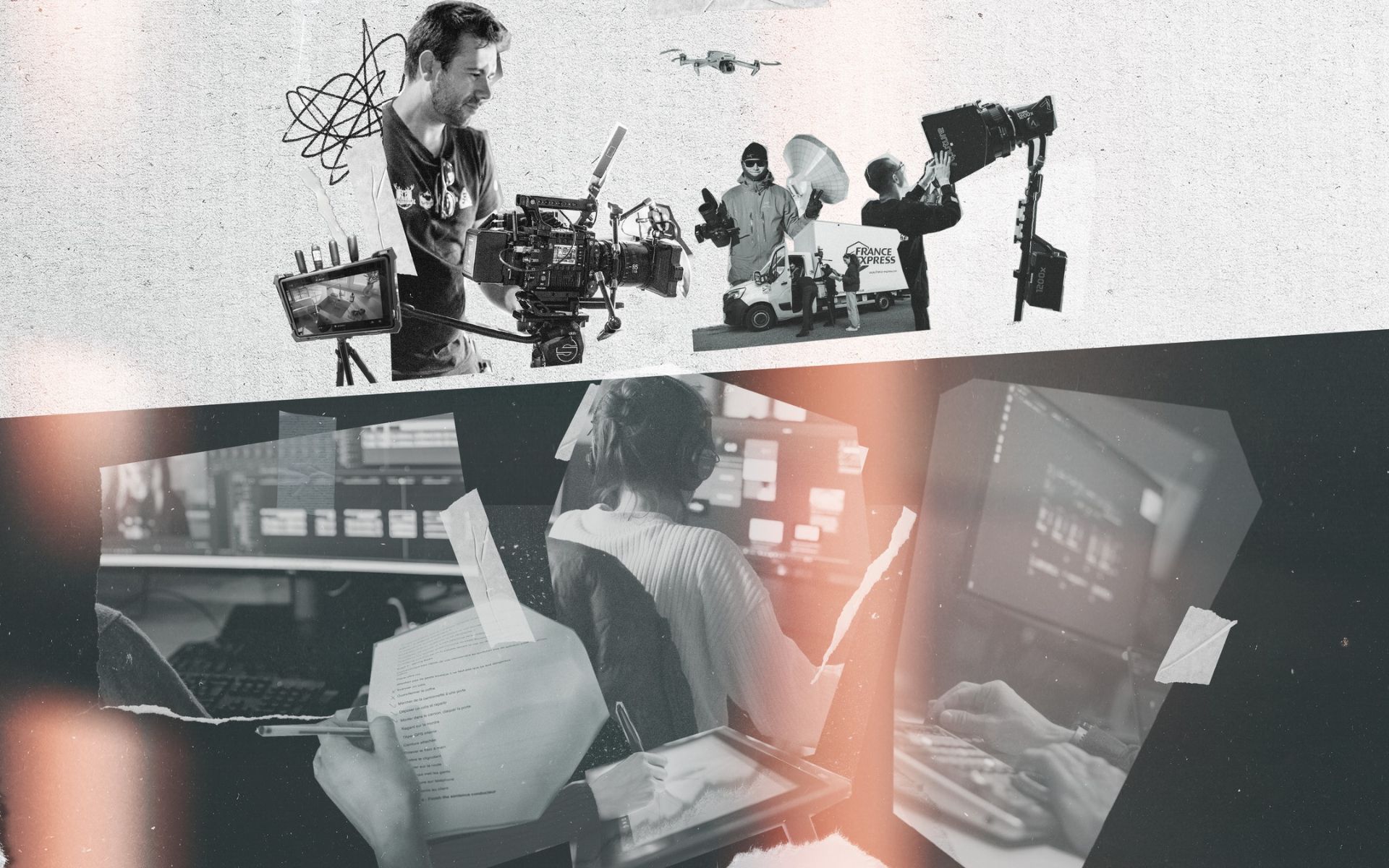
The shoot is the most visible part of a film production, but it only represents part of the work. Before the camera starts rolling, the project needs to be developed, the shoot prepared and numerous decisions approved. After filming, there is still editing, color grading, sound work and the creation of different deliverables.
So, where does the budget of a brand film or advertising production actually go?
A different budget for every film
There is no universal breakdown. Based on the productions we have worked on, concept development and art direction can account for around 3 to 10% of the budget, pre-production 7 to 20%, filming and equipment 25 to 60%, logistics 3 to 15%, post-production 15 to 45%, and project management 6 to 12%. Rights and licensing can vary significantly from one project to another.
These ranges are not meant to be added together: they change depending on the nature of the film. A motion design project will naturally allocate more of its budget to post-production, while a film involving several shooting days, sets or a larger crew will invest more heavily in production.
It all starts before the shoot
Before producing any images, you need to determine what the film is meant to achieve: launch a product, build brand awareness, support a campaign, attract new talent or simply tell a story.
This concept development and art direction phase defines the message, tone, distribution channels and visual universe of the project. It includes discussions with the client, creative research, writing and the development of initial visual references.
This is also where much of the film’s value begins to take shape. A beautiful image is not enough if it does not tell the right story.
Pre-production: preparing for a better shoot
Once the idea has been defined, pre-production turns it into a concrete project. Scriptwriting, storyboards, location scouting, casting, sets, styling, crew selection and technical planning all help anticipate what will happen on set.
On some productions, an animatic can even be used to simulate the film before shooting, allowing the team to check its pacing and duration. The PPM deck then brings together the main creative and technical decisions so that the client, director, production team and department heads all share the same vision.
Call sheets organise each shooting day, covering schedules, locations, crew, scenes, equipment, transport and catering. When dozens of people are working together, this level of preparation is essential to avoid delays and unnecessary costs.
The shoot: crew and technical resources
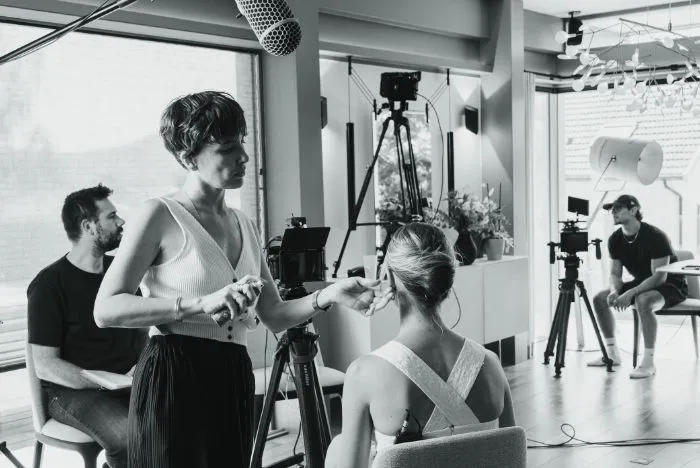
This is naturally the most visible stage. Depending on the ambition of the film, a set can bring together a director, production manager, cinematographer, camera assistants, sound engineer, lighting crew, grips, production assistants, stylists, makeup artists and actors.
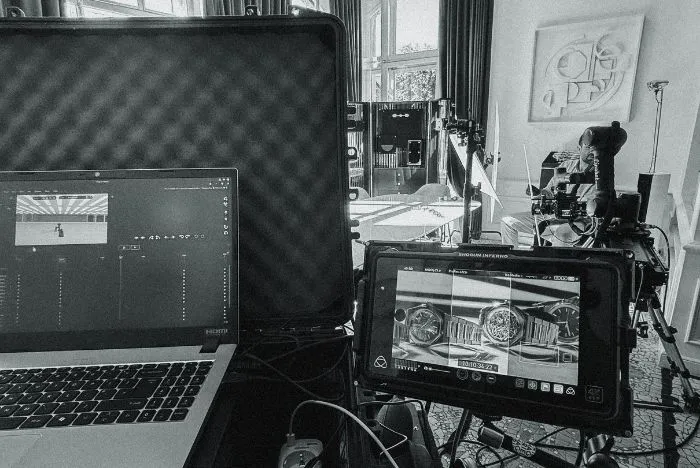
Then there are the technical resources: cameras, cinema lenses, lighting, sound equipment, grip equipment and camera movement systems. The equipment should always be chosen according to the desired result. A setup built around a RED V-Raptor and cinema lenses, for example, requires more accessories, preparation and sometimes a larger technical crew than a lightweight camera setup.
The objective is not to use the most expensive equipment, but to choose the tools required to create the images the project actually needs.
Logistics: an often invisible expense
Equipment transport, crew travel, hotels, trains or flights, tolls, meals, catering and production vehicles are rarely visible on screen, but they can quickly become a significant part of the budget.
Their impact mainly depends on the size of the crew, the length of the shoot and its location. As a video production agency based in Annecy, we regularly travel with our team and equipment across France and Switzerland.
Post-production: where the film takes its final form
When filming ends, the work is far from over. Footage management, editing, color grading, sound design, mixing, motion design, VFX, retouching, voice-over, subtitles and different versions can require several days or even several weeks of work.
Two 30-second films can therefore require radically different amounts of post-production. A relatively straightforward edit will not involve the same resources as a film built around visual effects, 3D or extensive sound design.
This is the stage where the footage captured on set truly becomes a finished film. Our in-house post-production workflow covers editing, color grading, sound design, VFX, 2D and 3D animation through to final delivery.
Managing the project from brief to delivery
Throughout the production, someone also needs to coordinate the teams, manage the schedule and budget, organise approvals, centralise client feedback and prepare the different deliverables.
This project management work is less visible than filming or post-production, but it creates continuity between every stage and ensures that everyone has the right information at the right time.
What about rights and licensing?
Rights and licensing are probably the most variable part of a production budget. Their cost depends on factors such as actors and voice-over talent, territories, usage periods, distribution channels, music licences and the potential use of archive footage.
A production intended for a limited number of digital channels will therefore have a very different rights structure from an international campaign running across multiple platforms for several years.
A budget that covers much more than the shoot
Behind an advertising film are many different professions: production organises the project, the cinematographer shapes the image, the production team keeps the set running, the editor builds the rhythm of the story, the colorist refines the images and the sound designer creates its sonic universe.
These skills are not there to make a production unnecessarily complicated. They are brought in according to the level of quality and ambition the project requires, whether for a luxury brand film, a commercial or another type of branded content.
The budget of a film therefore covers much more than one or several shooting days. It finances the entire process required to imagine, prepare, produce and finalise the images.
.jpg)
.jpg)
.webp)

L'IMAGERIE
FILMS

